



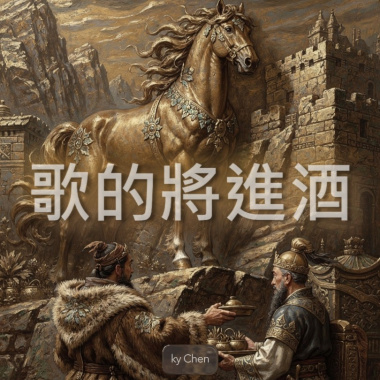
歌的將進酒
medgyver

介紹
by #gemini
絲路上的狂喜迴響:跨越時空的李白《將進酒》
在一次令人屏息的時空與地理碰撞中,k.y. Chen 與 AI 模型 Suno v5.5 共同打造了一部現代世界音樂的傑作。這首 2026 年版的唐代李白名作《將進酒》,完成了一項不可能的任務:將一首經典的中國勸酒詩,轉化為一場引人入勝的波斯音樂儀式。創作者大膽採用台語羅馬拼音(Taiwanese Hokkien),精準捕捉了更貼近中古漢語的入聲與古老音韻。這使得歌曲中的口白與副歌吟唱,散發出一種粗獷而接地的生命力,展現了現代華語難以企及的原始張力。
這首單曲的卓越之處,在於其極具野心的聲音建構。透過提示詞中對「波斯傳統藝術音樂」與「1990年代民謠錄音」的要求,製作上刻意摒棄了數位時代的精緻修飾,轉而擁抱乾冷的單聲道空間感與溫潤的類比磁帶飽和度(tape saturation)。這種田野調查般的真實感,讓塔爾琴(tar)與塞塔爾琴(setar)的二重奏顯得無比親密。180 BPM的自由節奏(rubato)宛如活物般呼吸,完美契合了李白酒酣耳熱時那種難以捉摸的狂放。
當卡曼賈(kamancheh)的旋律穿透調式持續低音(modal drone bed),並與清脆的琵琶獨奏相互交織時,跨文化的張力達到了頂峰。琵琶這項經由絲路傳入中國的樂器,在此成為了完美連接東亞與中東的音樂橋樑。在人聲表現上,「冥想般的阿瓦茲(Avaz)」唱腔打破了古典詩詞的斯文朗誦。台語的吶喊與微音程(microtonal)的拉長尾音,將詩人面對時光飛逝的無奈與及時行樂的狂喜,昇華為一種帶有「宗教儀式莊嚴感」的極致釋放。這不僅是 AI 音樂生成的勝利,更是一次對人類共通情感的深刻探索,讓千年前的「萬古愁」在異域的弦音中找到了完美的出口。
Echoes of the Silk Road: A Transcultural Reimagining of Li Bai
In a breathtaking collision of epochs and geographies, k.y. Chen and AI model Suno v5.5 have forged a masterpiece of modern world music. This 2026 rendition of Li Bai’s 8th-century opus, Qiang Jin Jiu (Bring in the Wine), achieves the impossible: it transmutes a quintessential Chinese drinking poem into a spellbinding Persian ritual. By utilizing Taiwanese Hokkien romanization, the creators tap into ancient phonetic roots that align closer to Middle Chinese, lending the spoken word intros and chant-hook refrains a visceral, earthy authenticity that Mandarin often smooths over.
The brilliance of this track lies in its audacious sonic architecture. Driven by the prompt’s demand for "Traditional Persian art music" and a "1990s folk recording" aesthetic, the production abandons polished digital sheen for dry mono room acoustics and warm tape saturation. This analog grounding makes the tar and setar duet feel breathtakingly intimate. Set to a 180 BPM rubato, the tempo breathes like a living organism, capturing the unpredictable, wine-soaked euphoria of Li Bai himself.
The cross-cultural synergy peaks when the kamancheh’s melodic spikes weave through a modal drone bed, suddenly yielding to sharp, percussive pipa solo breaks. The pipa—an instrument historically imported to China via the Silk Road—serves as the perfect bridge between East Asia and the Middle East. Vocally, the "meditative avaz" style strips away the polite recitation usually associated with classical poetry. Instead, the Hokkien shouts and elongated microtonal phrasings elevate the poet's existential dread and hedonistic joy into a state of "ecstatic release." It is no longer just a poem; it is an exorcism of "eternal sorrow" (萬古愁). This is not just a triumph of AI music generation; it is a profound testament to the borderless nature of human emotion.
...查看更多 收合歌詞
** **
** 將進酒 **
**唐代 李白**
** ông. Lí Pe̍k **
** 創意生成: k.y. Chen **
** 作詞: 李白 **
** 作曲編曲, 演奏演唱: suno v5.5 (2026) **
** **
Ghùuung, bhùuuk-kìèn,
hòong hóóóóo
tzhii sùiiih,
thèeeen shìòng láááái~
bùun lìùu
dhòo hàààài,
bhùuug, hìù hàiii~
Ghùuung, bhùuuk-kìèn,
ghòo thóóón
bhiing ghììng,
bhìììb-bhèèèe hùàaaaag,
tiaù sùu
tshiing sii~
bhòoooo shing-sùàaag,
zhìn sìnn, dhig-yiih,
súúh tzhììììn-húann
bòt sù, ghimm tzùun~
khong dhùi, ngùàaaag
thènn shing
nghòòò zhààài,
pììd-ìúuh ìònng,
tsèen ghiim
sààànp jhììn,
hùàààng hìuu lhááái~
peng ìòng
zhài ngíù,
jhìàaaag ùiih lòop
húèe sùu
yììg yhìììm,
sààààm bhìiiit bàai~~
[Interlude]
Ghìm, Huu-Tzùuu
Tháaann, Ghììììu Séeenn
jhíoong ghììng tzhìiiù
búeeeeeh, mho̍o̍ tiin,
wùu ghùung
ghóóóóó yĩt khìòd,
tsìàààà ghùung
wùi nghòo,
tshèeeeh nìì-thìiiing
[Interlude]
tzhíong ghòo
shùng nghìo̍d,
pùùùd-tzhìòoo ghùìi,
dààààng nghùànn
tíòng zùii,
bùùùg hùu tshèèè,
ghòo lhài
sììng híèeng
ghài zhiiiiig bhòòòg~
wúii ìùh
ííím jhìàah~
líùu, ghìi bhiing
diin òong
sèeh shìg,
ììhènn bhiing lo̍o,
dhóó jhìùu,
shìp tsééng
tzùu húàng hìòg
zhúu jhííng
hóo wììh,
ghíen shíàau tsíènn?
ghìiiiing sùùg
ghóóo tsùu,
tùii ghùnn tzhìòg~
nghòooo húàa mááá
tshèeeen ghiim ghíùu
ho zhìi
jhìòooon tzùg,
hùàan
bhíi tzhìùu~
wùu nìì,
thòng shìào
bànn ghòo shíùuuuh
nghòooo húàa mááá
tshèeeen ghiim ghíùu
ho zhìi
jhìònt tzhùg,
hùàan
bhíi tzhìùu
wùu nìì~~
thòng shìào~~
bànn ghòo shíùu~~~
(wùu nììì)
(thòng shìào)
bàann ghòo shíùu~~
[End]
** **
君不見,
黃河之水天上來,
奔流到海不復回。
君不見,
高堂明鏡悲白髮,
朝如青絲暮成雪。
人生得意須盡歡,
莫使金樽空對月。
天生我材必有用,
千金散盡還復來。
烹羊宰牛且為樂,
會須一飲三百杯。
岑夫子,
丹丘生。
將進酒,
杯莫停。
與君歌一曲,
請君為我側耳聽。
鐘鼓饌玉不足貴,
但願長醉不復醒。
古來聖賢皆寂寞,
惟有飲者留其名。
陳王昔時宴平樂,
斗酒十千恣歡謔。
主人何為言少錢?
徑須沽取對君酌。
五花馬,
千金裘。
呼兒將出換美酒,
與爾同銷萬古愁。
** **
Dammn P.
哥你這首我五+1體投地都不夠描述我對您的崇拜啊😱😱😱😱😱😱😱😱😱
AlexHu
說不定以前李白是這樣唱他的詩的,可惜那時沒有錄音裝置!